Mini Power Banks for a Power Outage: What 2,500 to 10,000 mAh Really Covers
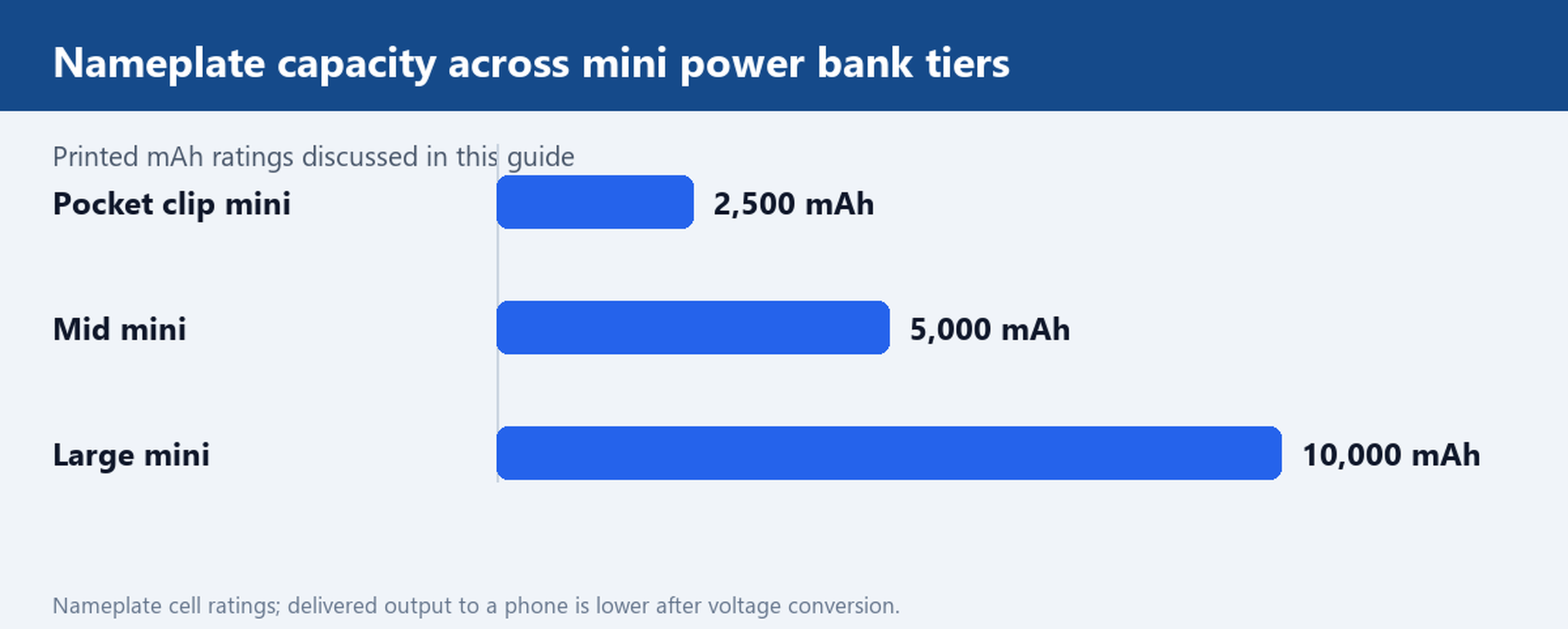
A mini power bank for power outage duty is a sizing decision disguised as a spec sheet. This guide reads capacity tiers, recharge paths and LED gauges in plain terms.

Mini, slim, card and keychain power banks: capacity vs size, built-in cables and everyday carry trade-offs.
A mini power bank for power outage duty is a sizing decision disguised as a spec sheet. This guide reads capacity tiers, recharge paths and LED gauges in plain terms.
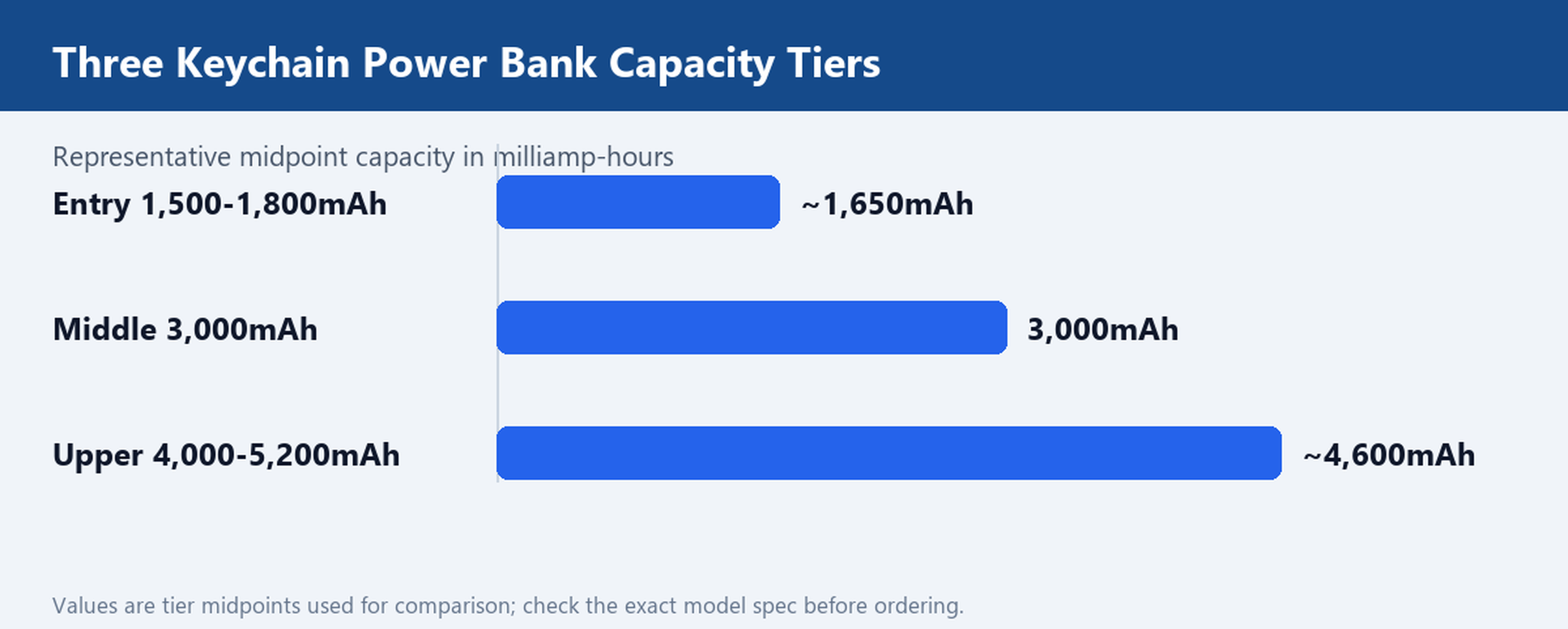
A keychain power bank lives or dies on its capacity tier, cell format, a realistic 5V/2A ceiling, the grams on your keys and the battery paperwork. Here is how to compare them.
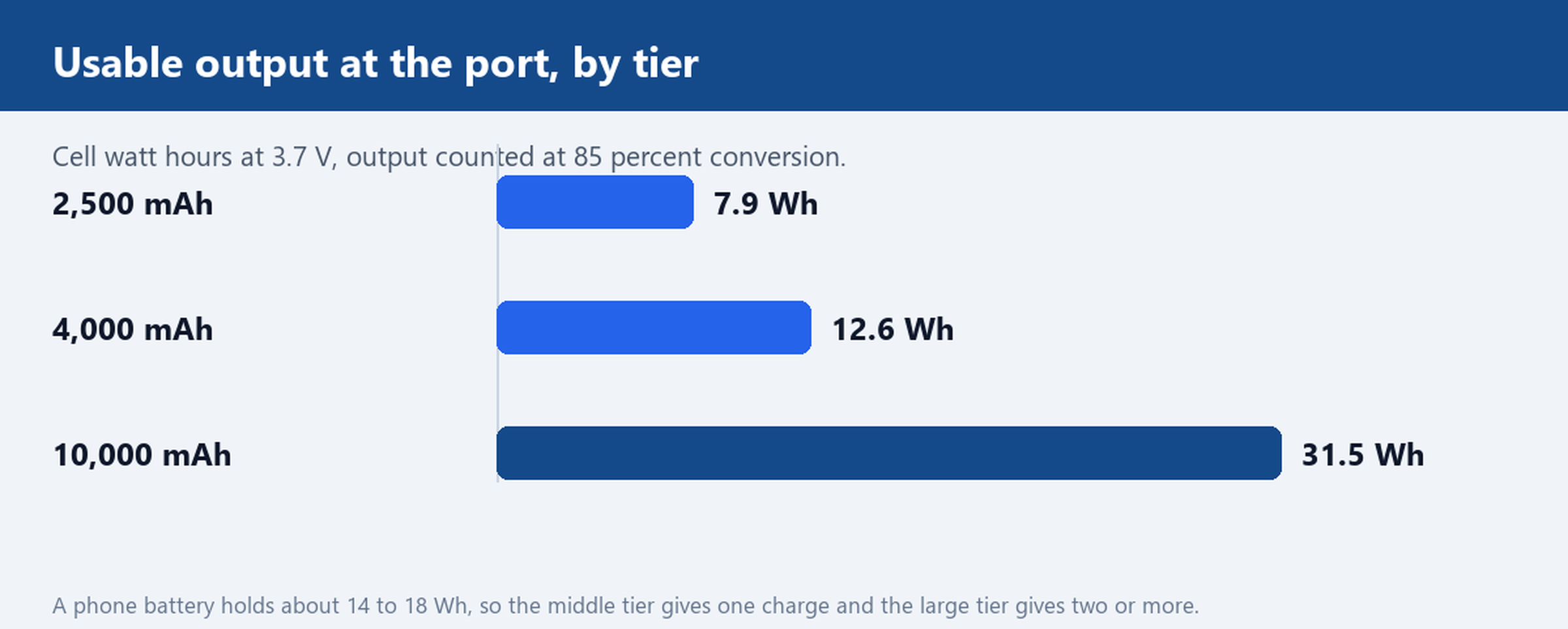
A buying check for slim power banks: the capacity trade behind an 11 mm body, why pouch cells are used, how to size mAh to a trip, and how long a 5V/1A input really takes.
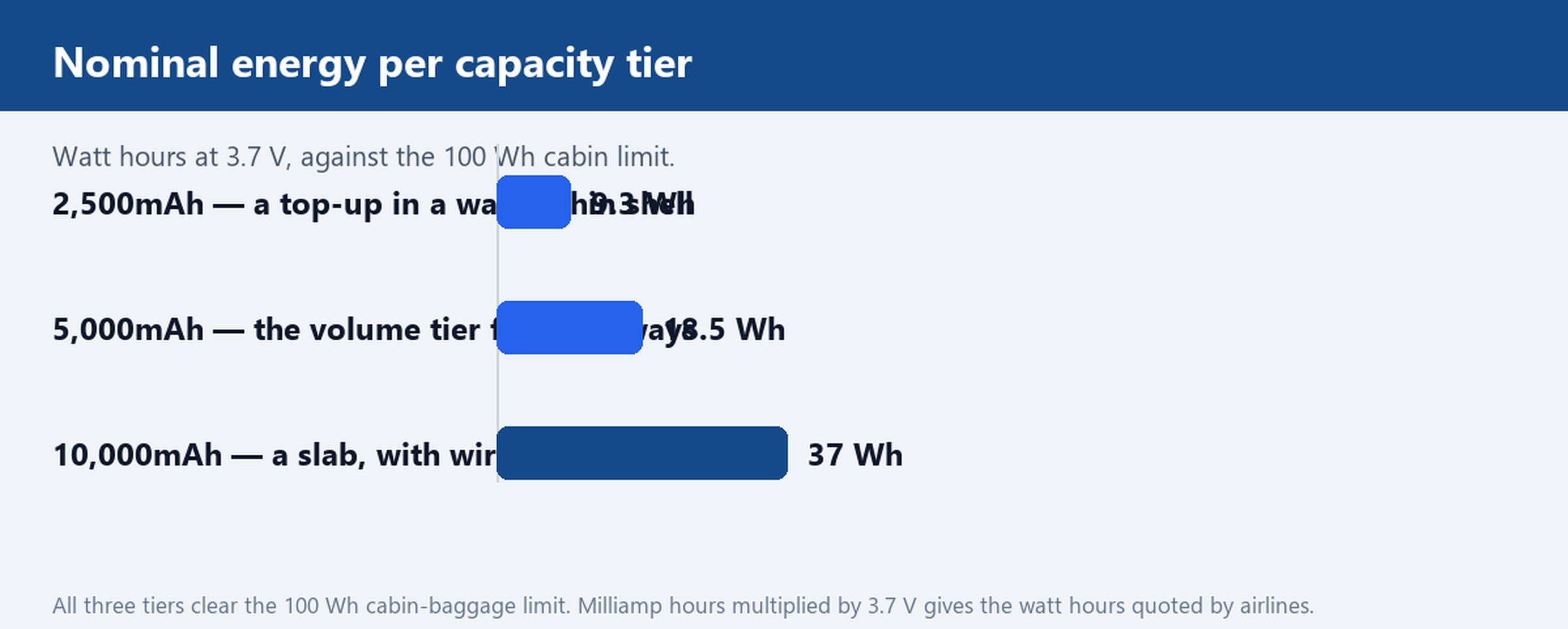
A card power bank is chosen in the wrong order by most buyers: capacity first, then thickness. Here is the order that holds up, with the 2,500mAh, 5,000mAh and 10,000mAh tiers and what each one actually recharges.
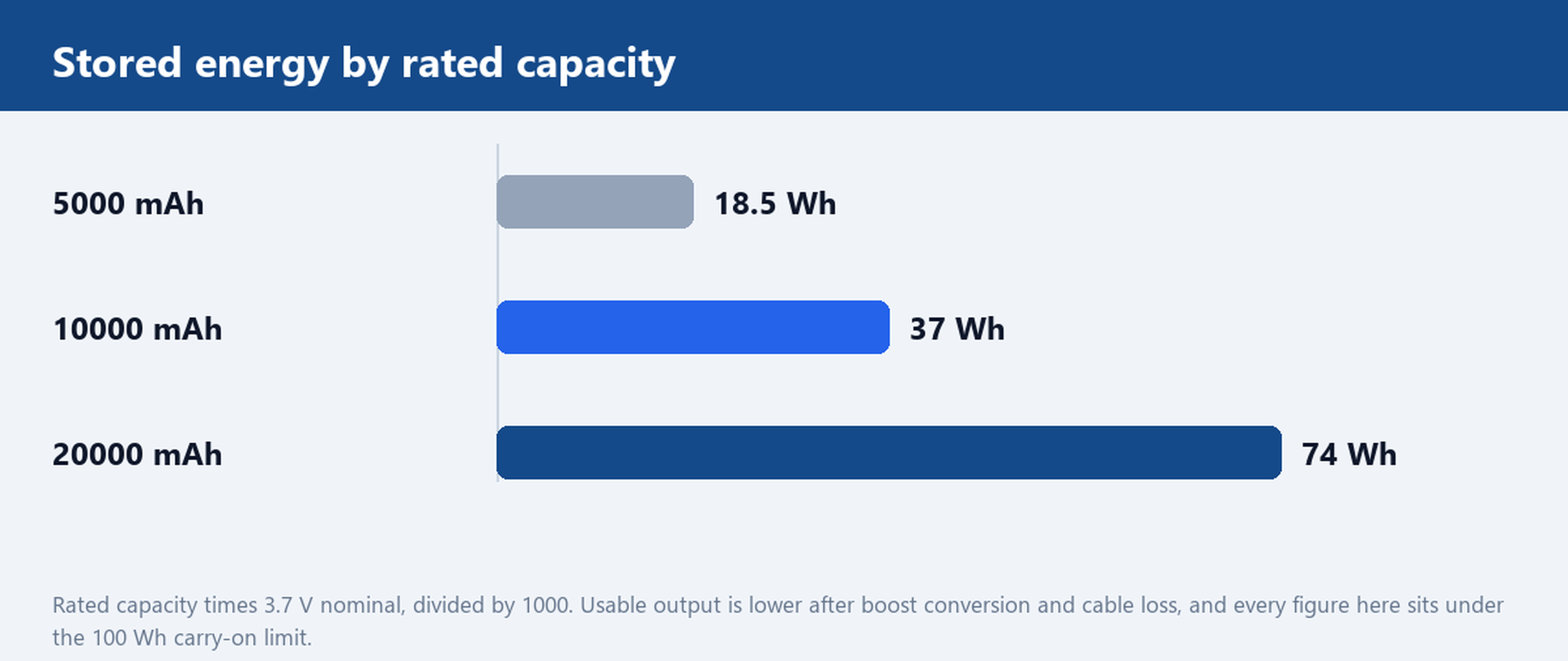
Built-in cable power banks fail at the exit, not in the cell. What to specify on strain relief, connector count and capacity before two quotes can be compared.
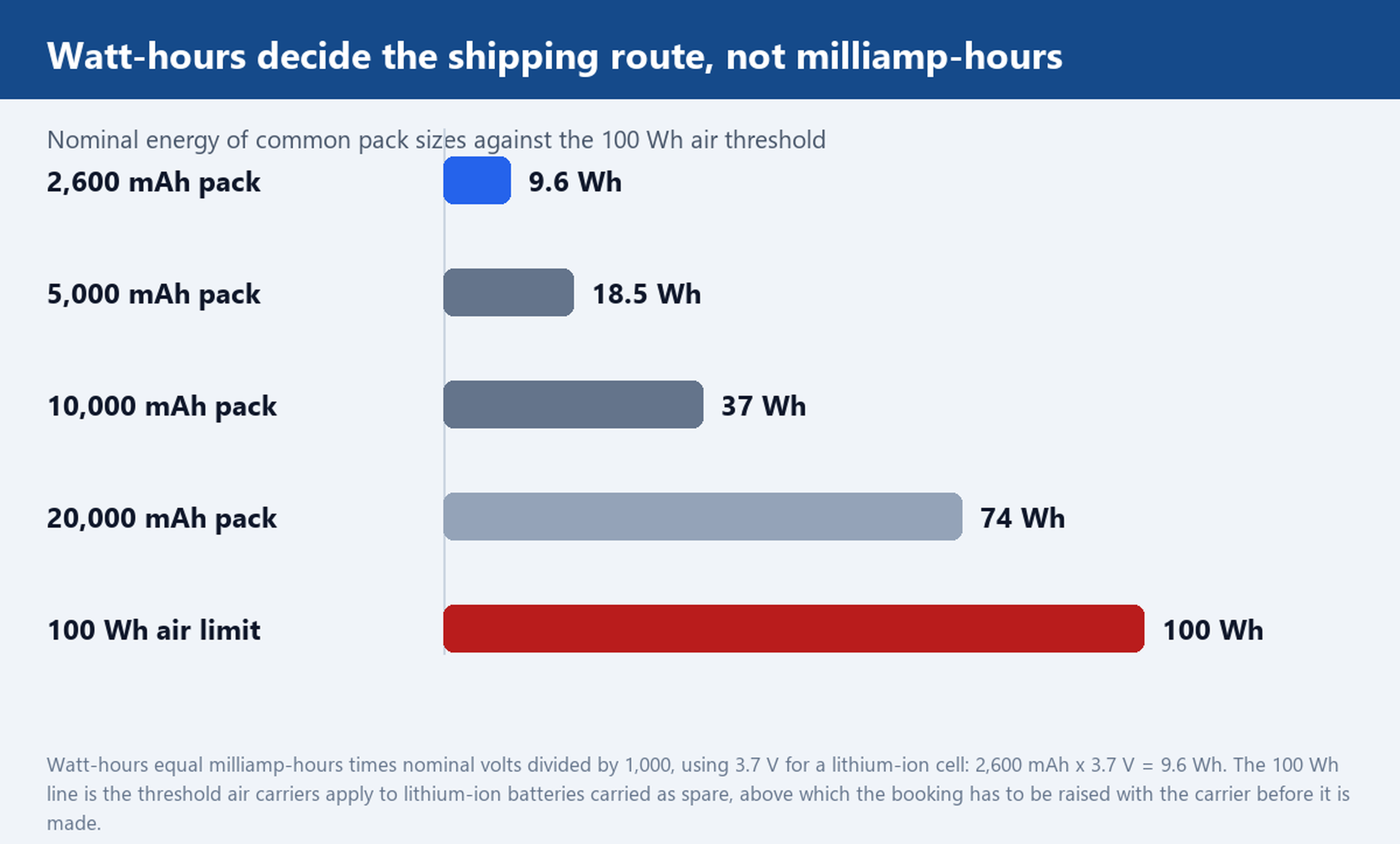
A 9.6 Wh mini pack is small enough to travel as giveaway stock, and that is where the paperwork fails. Here is which report answers which question, and what a cell change invalidates.
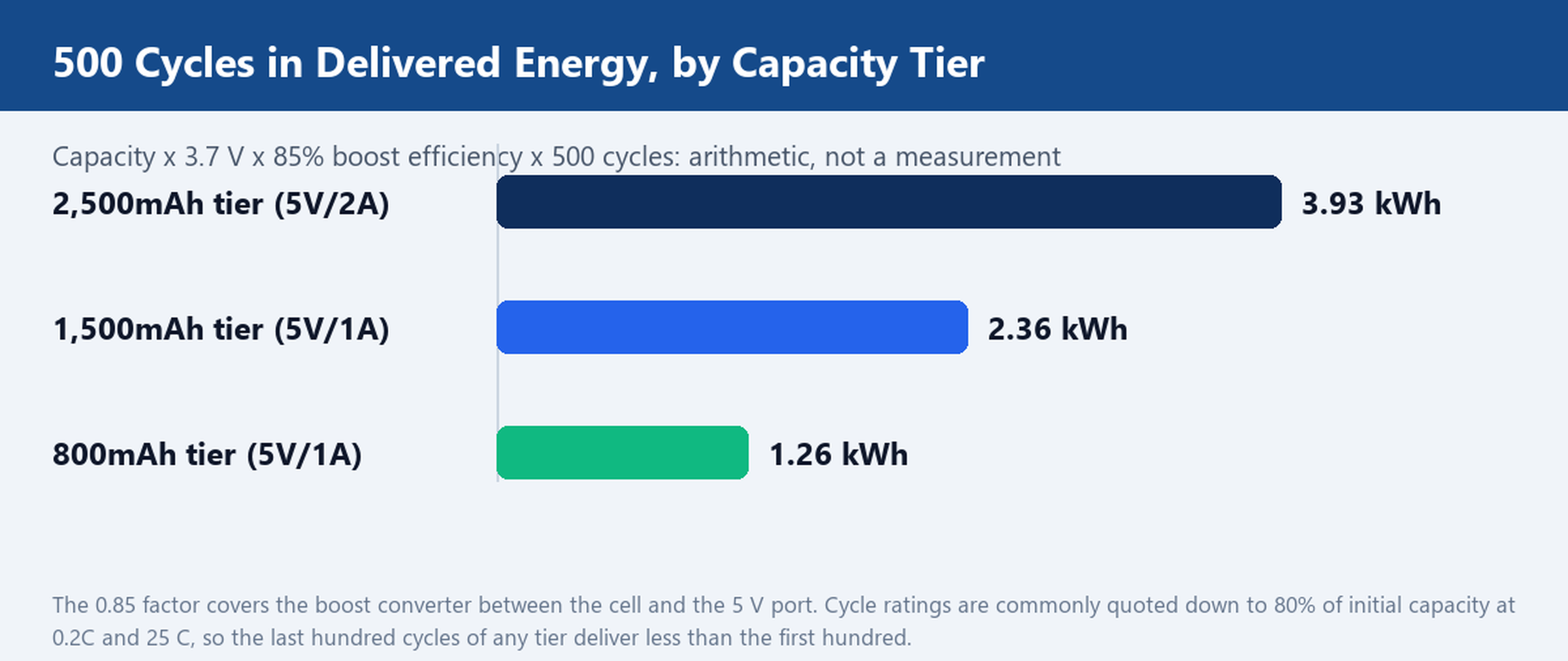
A 500-cycle number is a budget of delivered energy, not a countdown clock. Here is how to convert it across 800, 1,500 and 2,500mAh tiers, and which habits spend it early.